Paki
AI picture generator that helps children in the early stages of reading
Research methods
- requirements gathering, user interviews (field study), competitive analysis
- creating user flow, in-person usability study, analytics review, surveys
Year: 2026
Client: private investor
Target group: parents, primary school teachers, primary school headmasters
Challenge: create an easy-to-use platform from scratch, including a landing page that introduces new concepts to teachers and parents
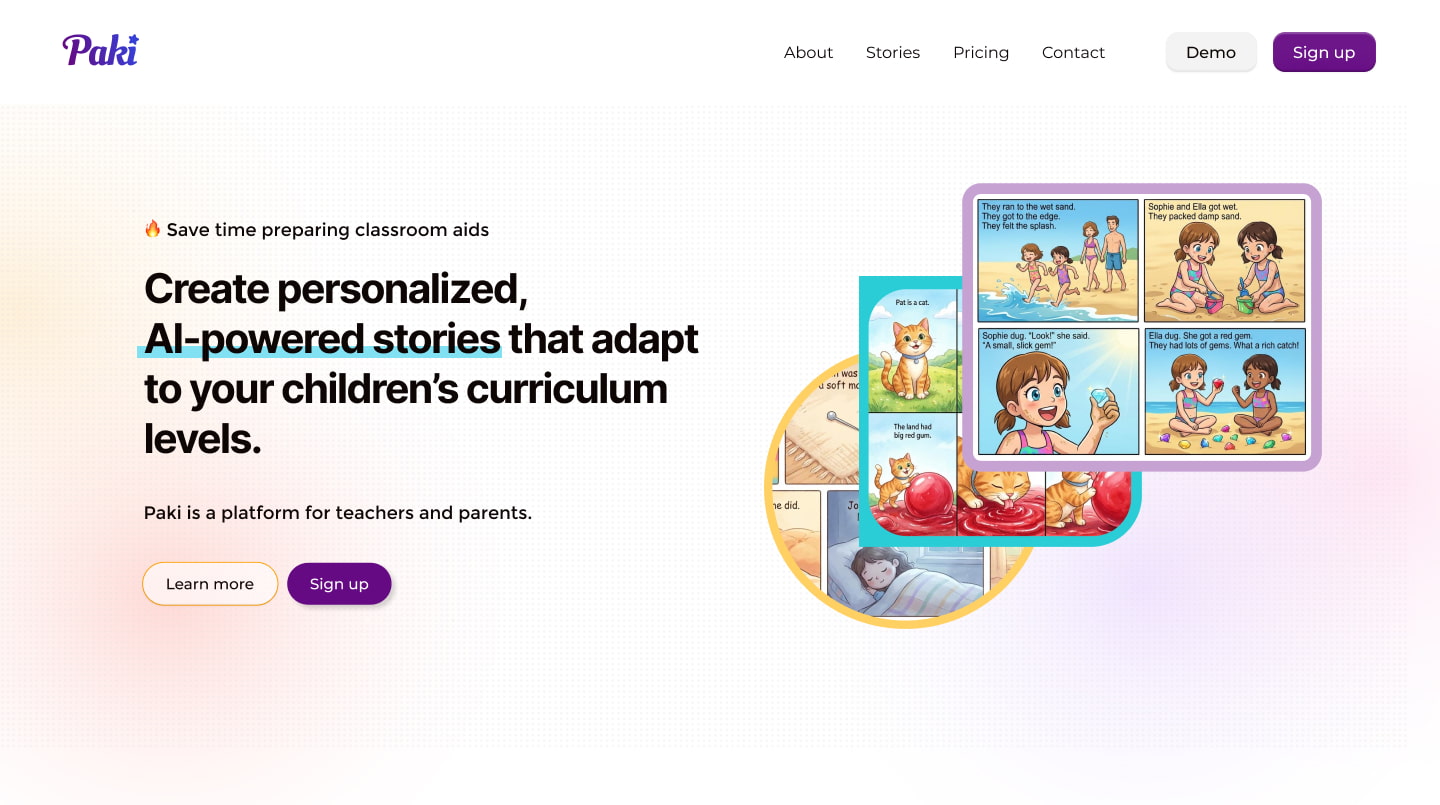
Paki is used as a short form or synonym for pakiwaitara in Māori, which refers to stories, legends, tales
Defining the problem
A private investor approached me to design a web app that uses AI to generate custom stories for children, inspired by his daughter’s need for more engaging reading material.
Learning how to read can be hard sometimes. Especially English, which has one of the most inconsistent and complex spelling systems in the world.
Phonics can be challenging due to difficulties with blending sounds together.
As a parent, I struggle to find books for my 6-year-old. My daughter is bilingual and she struggles a bit with her reading. She got these paper books from school but she knows them by heart.
An example of what children's learning aids can look like:
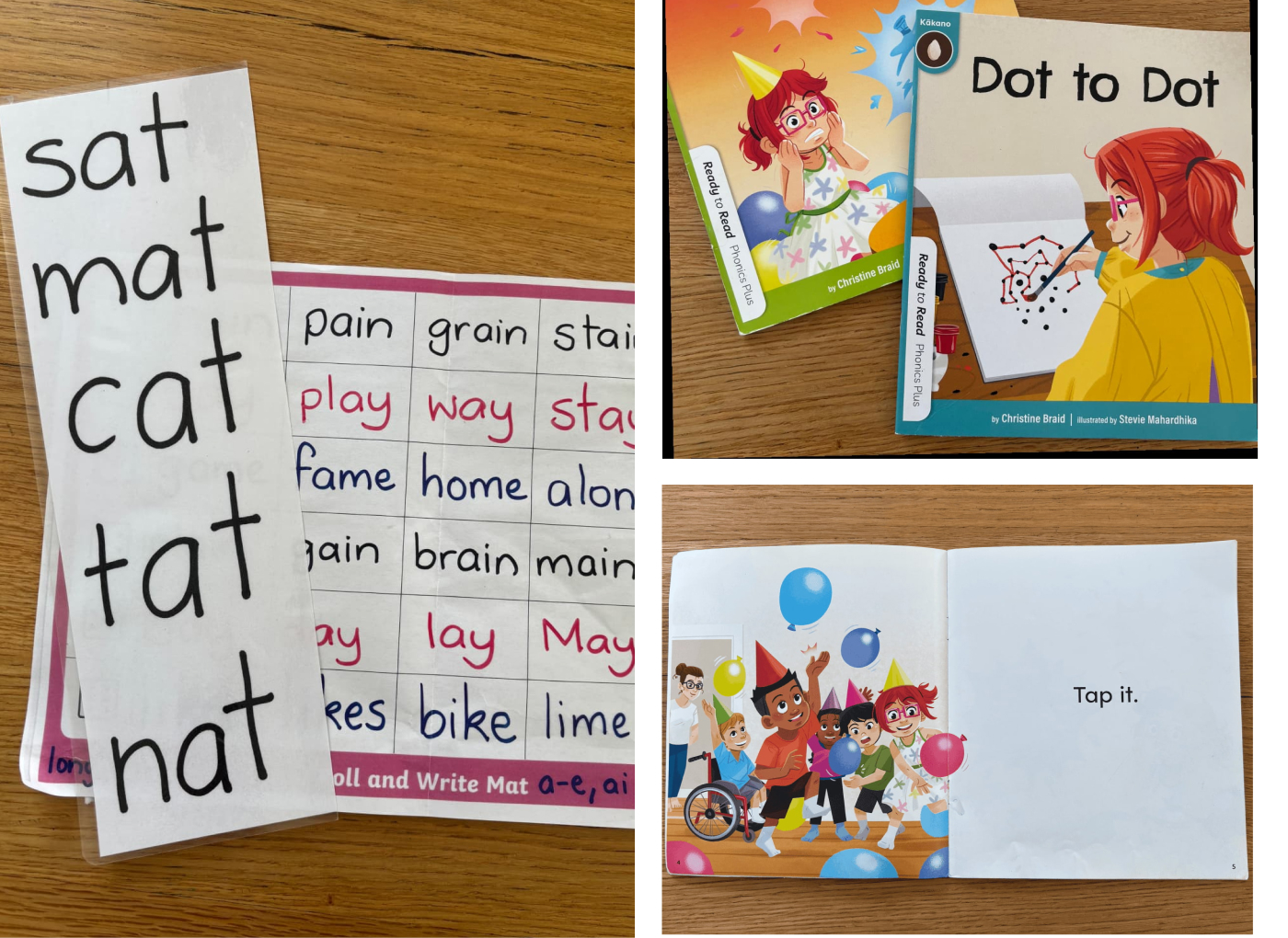
She got these paper books from school but she knows them by heart.
Matthew finds these materials very boring.
Solution
Building an app that uses AI to generate engaging content for children, allowing them to choose their own characters. It also keeps the language at an appropriate level, helping young readers stay confident and not feel discouraged.
Defining target audience
Primary: School teachers
- Responsible for differentiating reading material across 20-30 students at varying levels
- Familiar with Phonics Plus levels (Kakano, Tupu, Mahuri, Rakau)
- Need printable physical booklets for classroom and home use
- Paid accounts with generation capability
Secondary: Parents/Caregivers
- Want to support their child's reading development at home
- May not understand curriculum terminology (need it explained simply)
- Access books shared by their child's teacher
- May also create their own books
End user: Children (Ages 5-13)
- NZC Levels 1-4 (Kakano through Rakau)
- Read the books digitally or as printed A5 booklets
- Don't interact with the product directly — content is generated for them
User interviews
I decided to talk to a few primary school teachers about their teaching process. I wanted to probe how useful they would find the app.I asked ChatGPT to come up with some questions I could use in interviews, I verified some and I added questions of my own:
- What percentage of children in your classes manage to learn how to read without any homework?
- What percentage of children in your classes really struggle to read?
- What would "perfectly tailored" reading support look like?
- Can you walk me through how you usually teach reading in your class?
- What tools or resources do you currently use?
- What frustrates you about them?
- Would you have any worries when it comes to stories generated by AI?
- How important is personalization in reading materials?
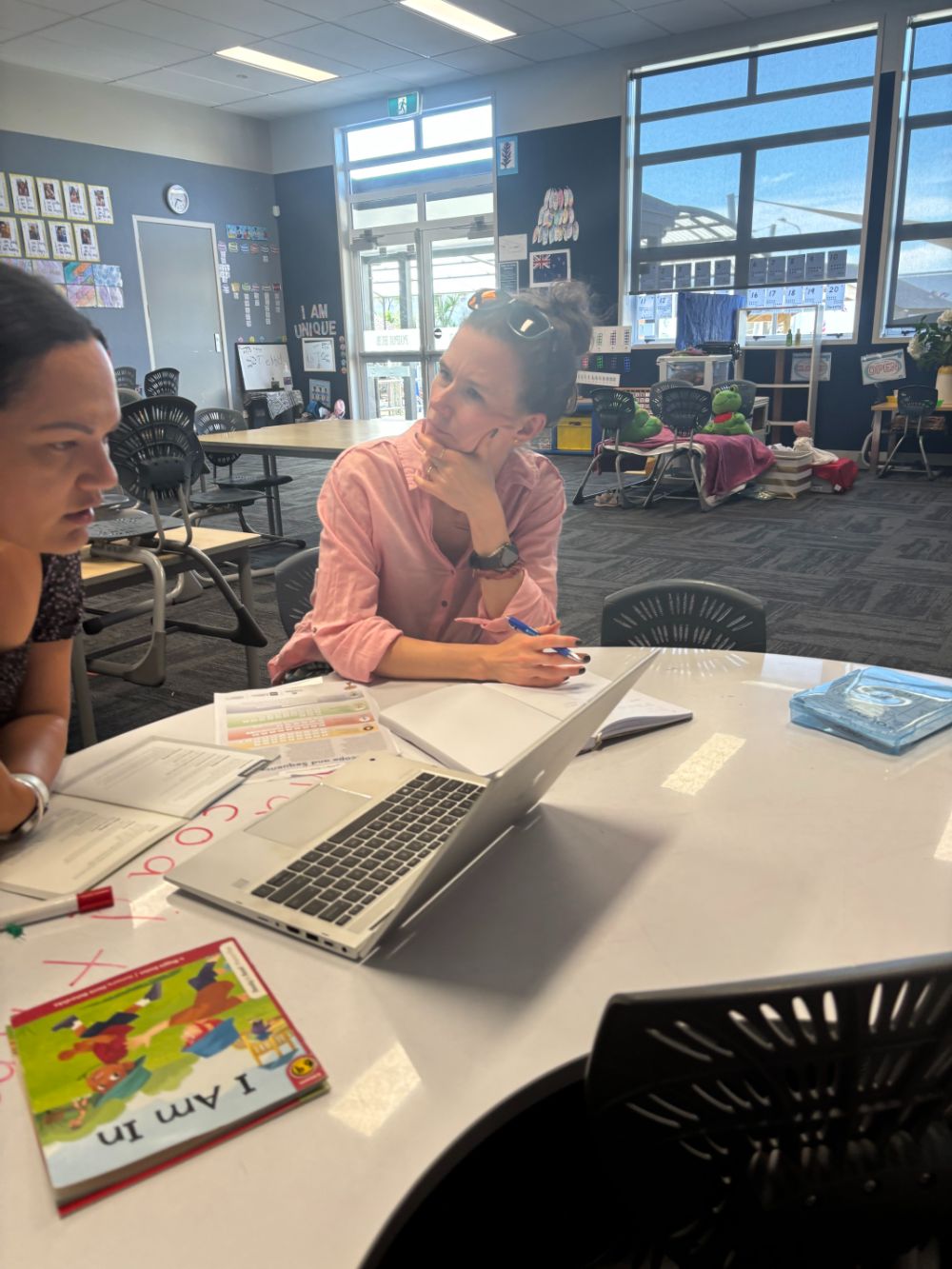
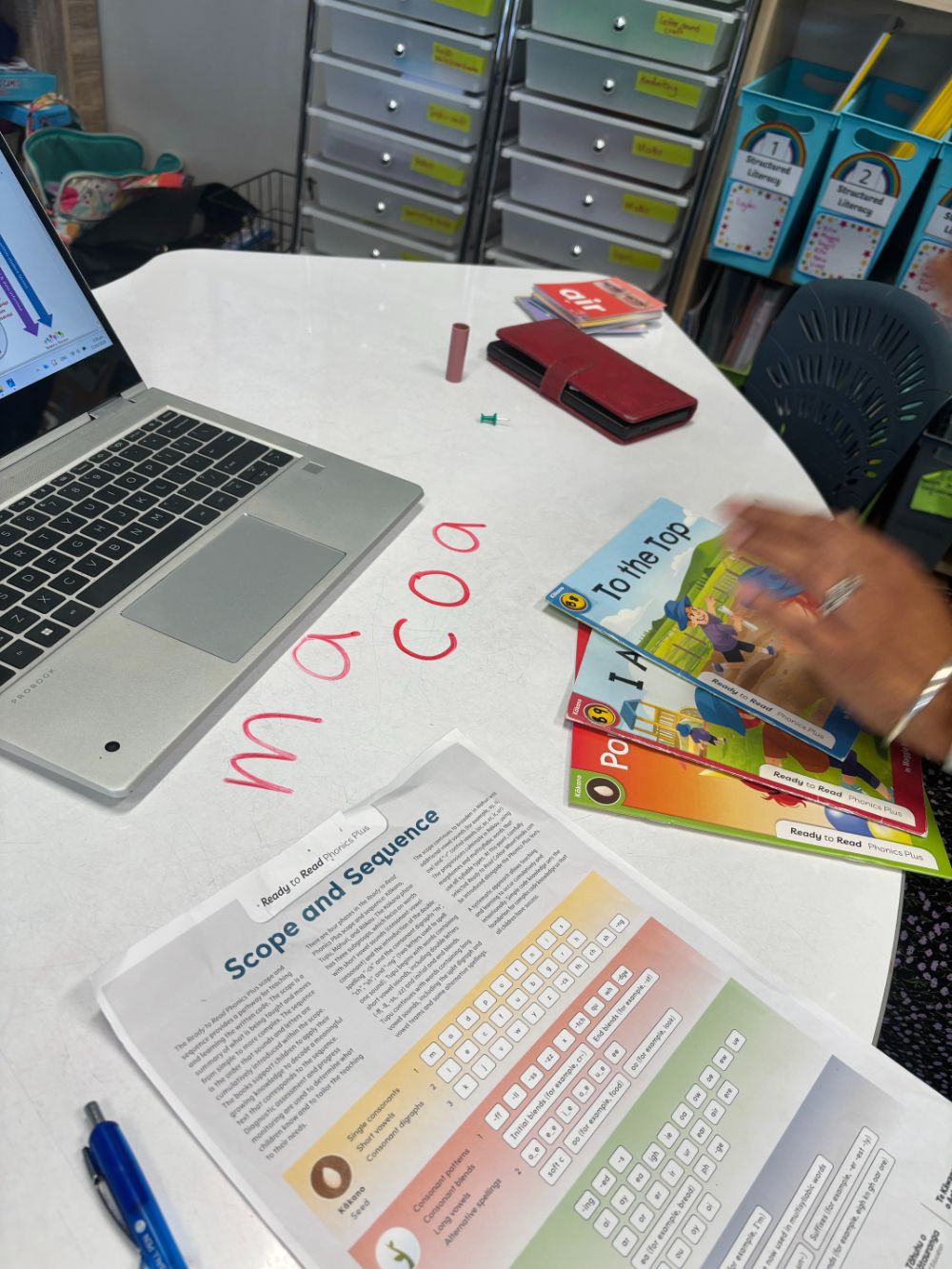
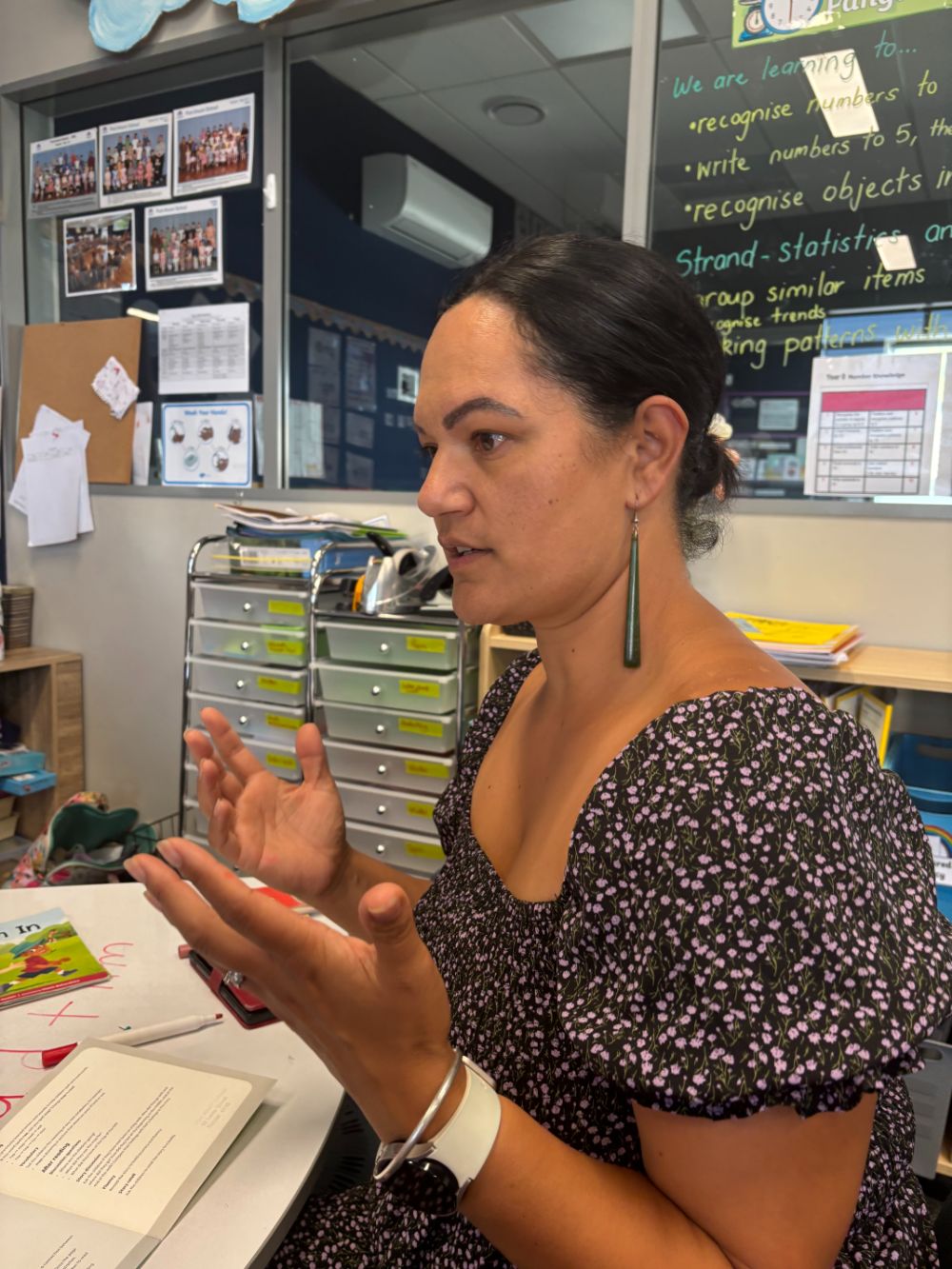
The gist of the interview: Teachers spend loads of time preparing materials for the children. Most children would need to do homework at home, about 10% of children in a classroom usually struggle significantly with reading and need more materials. Structured literacy introduced a new concept of learning - which was learning about each letter first before starting reading. To support this, AI-generated stories would need to follow a specific set of letters and sound combinations.
Competitive analysis
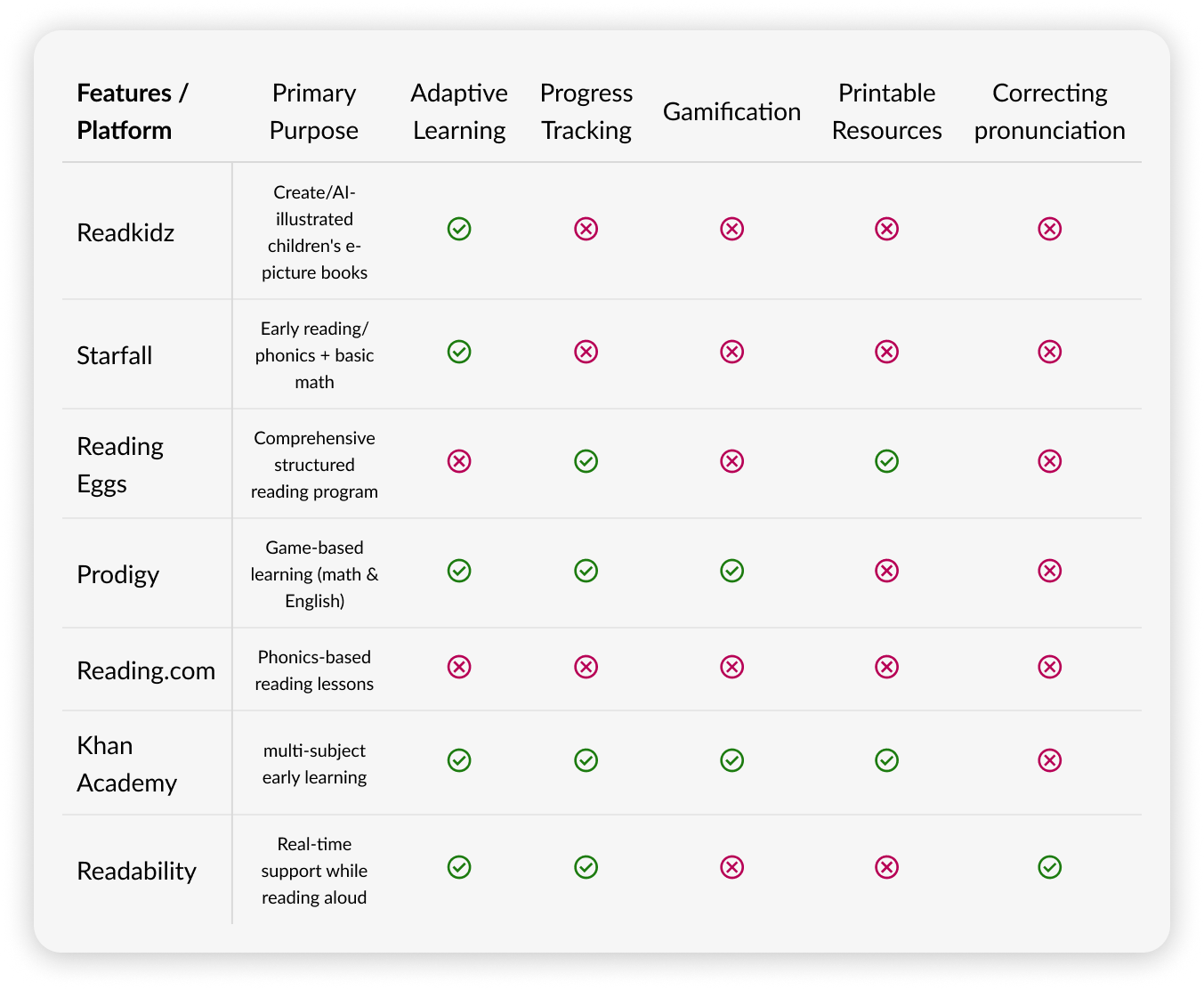
There are lots of apps and websites focused on helping children learn how to read or write. Some are designed for use at home by parents, while others are aligned with school curricula and used in classrooms. Many include adaptive learning features, progress tracking, and multimedia support such as audio narration and animations.
Conclusion of competitive analysis:
Inspired by Reading Eggs I had an idea to offer people free stories ("free resources") after signing up for a newsletter.
Although there are many apps and websites already, only one is similar to Paki. There is clear potential to capture part of the market.
Cooperation
Developer and I worked closely together - he used AI to create clickable prototypes. They looked promising. I reviewed them and made certain changes:
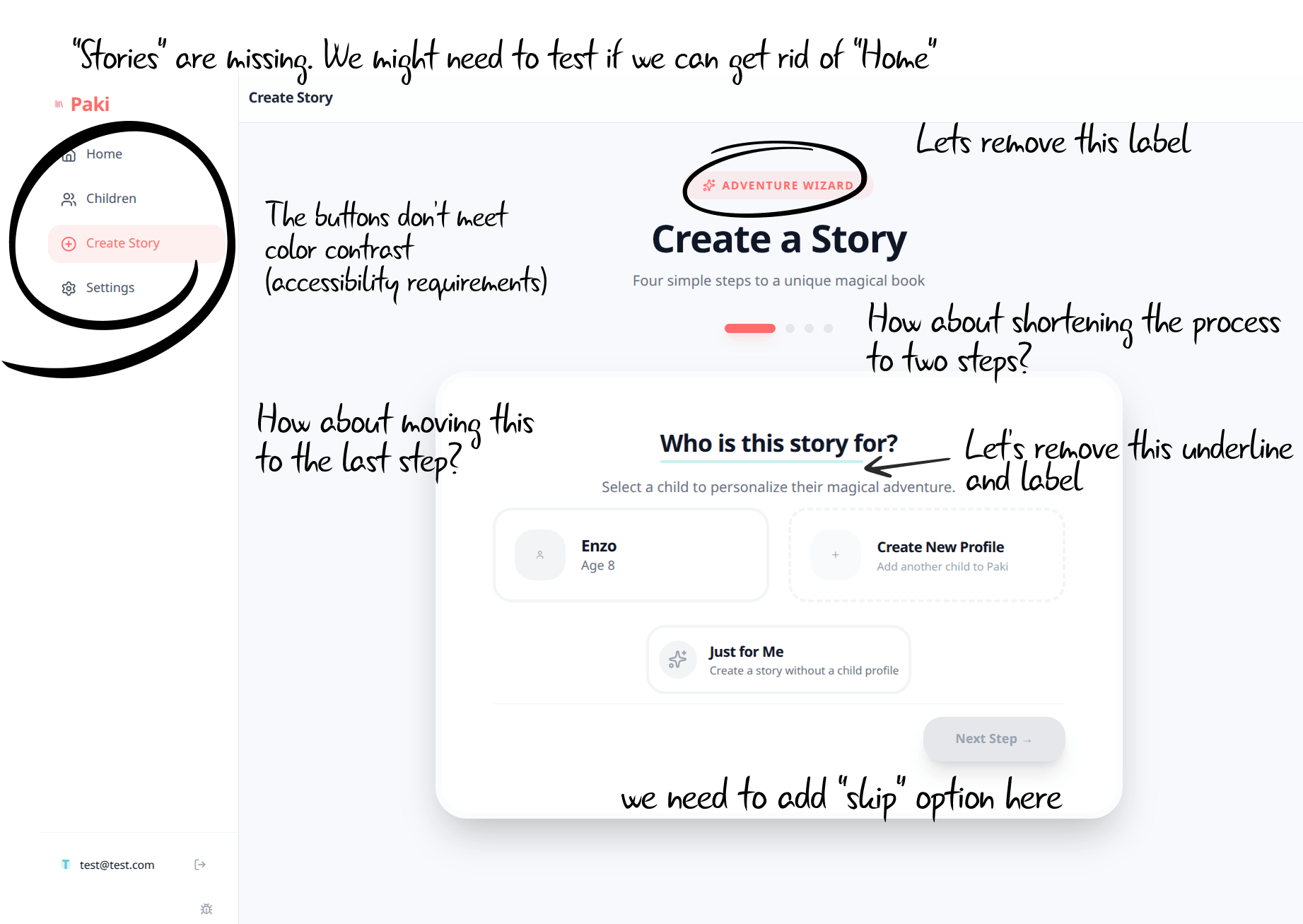
Clickable prototype testing
I made the decision to jump straight to prototype testing - functionality of the app was relatively simple and it took me a few hours in Figma Make to come up with a clickable prototype.
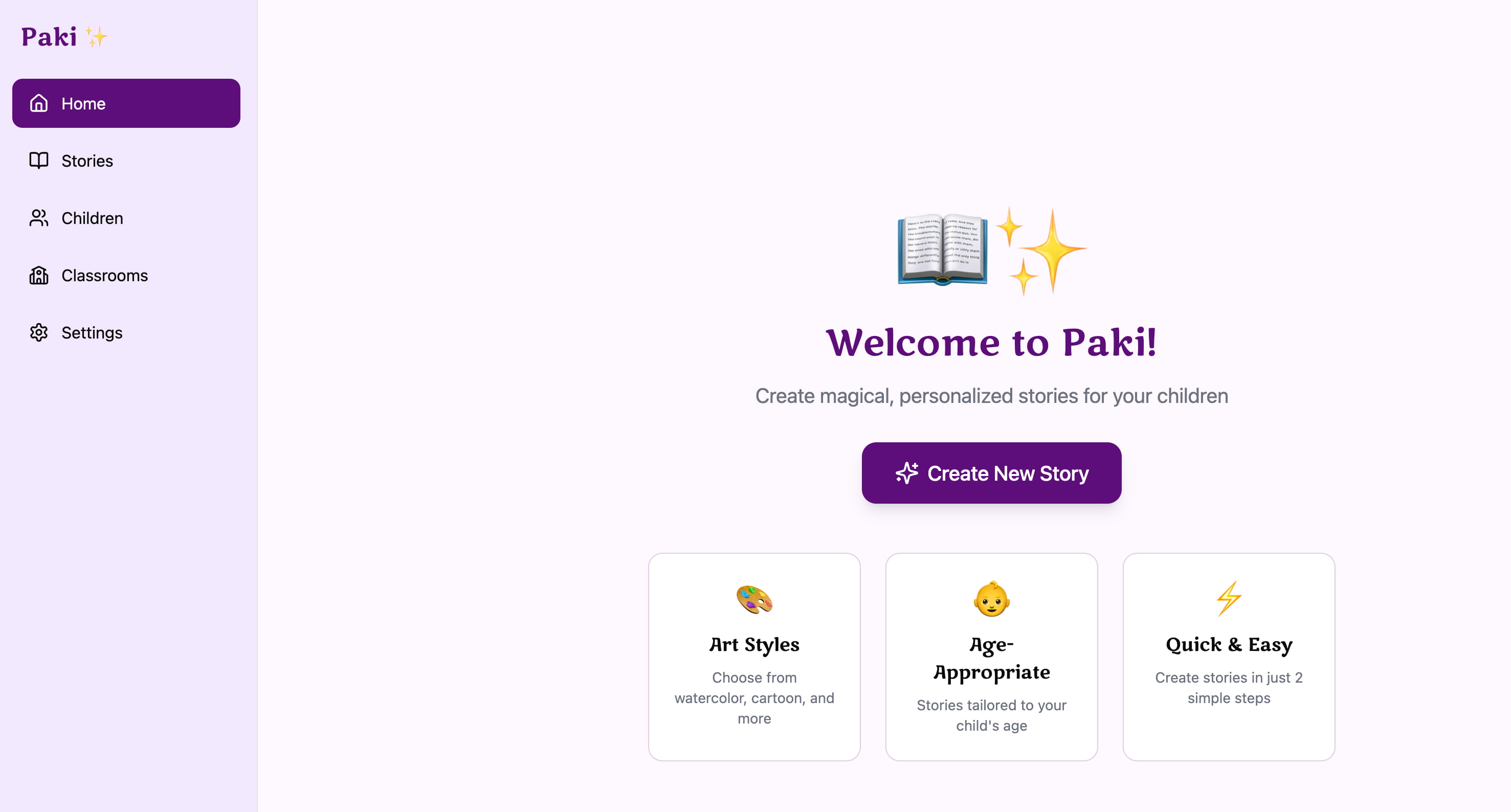 Click here to view the clickable prototype
Usability testing
I wanted to make sure that the prototype is intuitive and easy to use. I asked 4 teachers to complete tasks:
- Create a new classroom
- Assign 3 stories of level Kakano3 to the freshly created classroom
- Download one story that was created as the oldest
- Create a new story that would only have letters: a, k, c, p
- Cancel your subscription
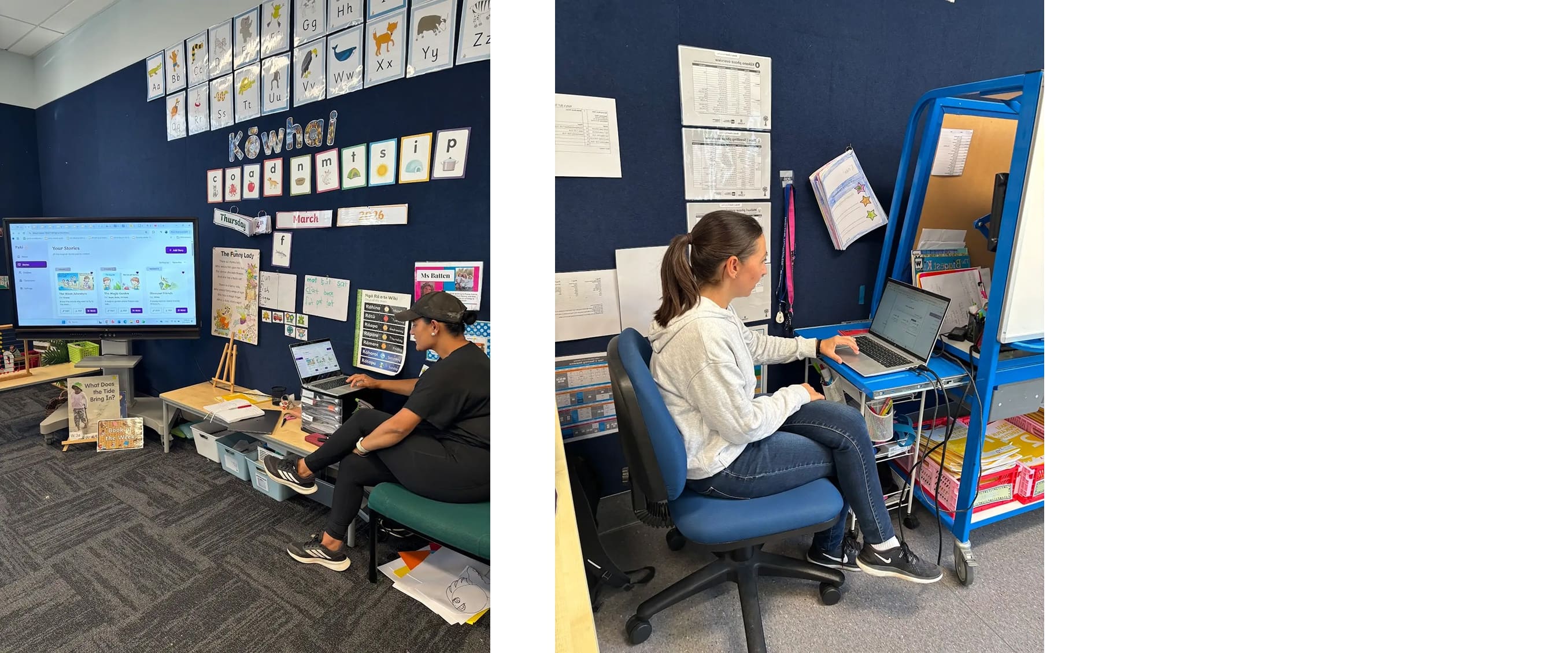 Results
All of the teachers were able to complete the tasks. Some of them had problems with finding the right buttons but they were able to find them eventually.
They found the app intuitive and easy to use.
The layout with stories wasn't too cluttered. I had been wondering if description of every story was needed - but two out of four teachers found it helpful.
Key takeaways:
- The word "classroom" was misleading to one teacher - in her case: she would like to group her pupils to three or four groups- and that's within one classroom
- I need to think about sharing stories with parents - as teachers would like to use Paki for homework
- A new case appeared: adding a new student in the middle of term - would assigning them to a class mean they automatically get links to all stories?
- Matching age with reading level wouldn't work in some cases - especially in under-resourced communities where reading levels may vary significantly.
- PDFs for download can be formatted in three ways: as colouring pages, compacted to save paper or one image on each page
Accessibility evaluation
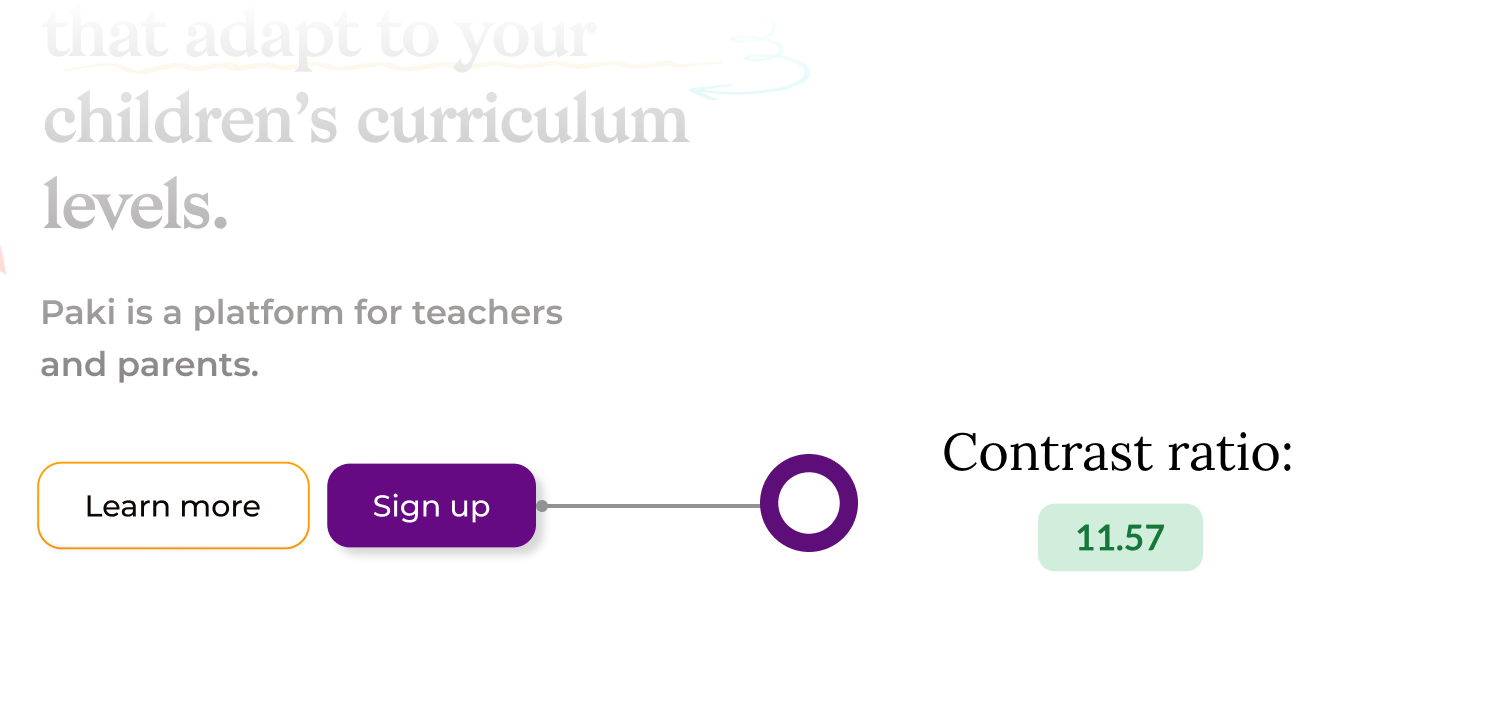
The app has been designed & evaluated for contrast to match at least AA standards.